close

News
Date published:
February 25, 2026
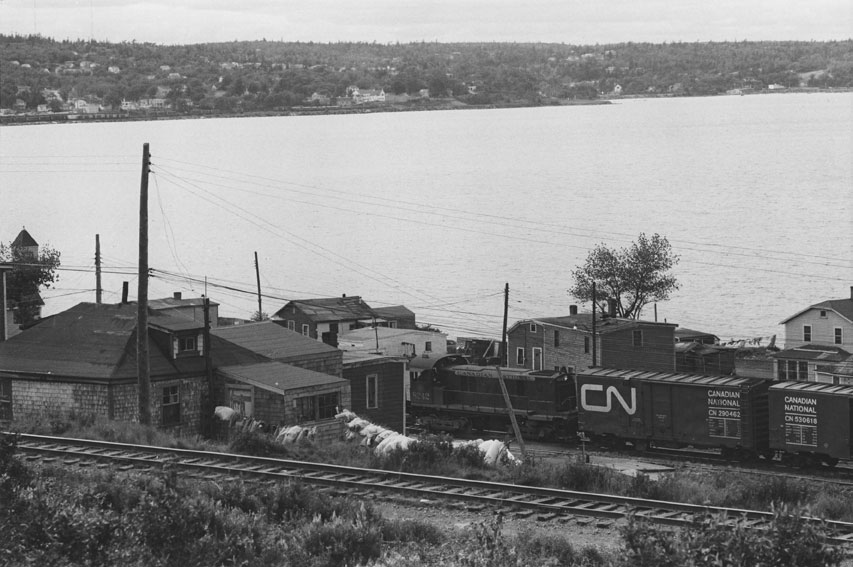
On 6 December 1917, the Halifax Explosion devastated the city of Halifax when the French munitions ship Mont-Blanc collided with the Norwegian relief vessel SS Imo in the harbour. The resulting fire and blast killed nearly 2,000 people, injured thousands more, and levelled entire neighbourhoods. It remains one of the largest non-nuclear explosions in history.
Among the communities affected was Africville, a historic Black settlement located along the Bedford Basin on the city’s northern edge. Because of its proximity to the harbour and the rail lines, Africville lay directly in the path of the explosion’s shockwave and the debris that followed. Homes were damaged or destroyed, residents were injured, and families were displaced.
Yet compared to other parts of Halifax, documentation of the explosion’s impact on Africville is sparse. While damage assessments, insurance claims, and relief records detail losses in the city’s commercial and residential districts, Africville’s destruction was never formally evaluated for compensation. Relief funds were raised nationally and internationally in the weeks following the disaster, but there is no clear evidence that those funds were directed to Africville residents in proportion to their losses.
.jpg)
The archival record itself reflects this disparity. Much of what survives about Africville in the immediate aftermath of the explosion comes not from residents’ own written accounts, but from outside observers.
One such account was submitted in 1918 to the Halifax Disaster Record Office by architect Andrew S. Cobb. Travelling by train toward Halifax on the morning of the explosion, Cobb found himself stopped near Africville shortly after the blast. His narrative provides a rare description of conditions in the community during the earliest rescue efforts.
According to Cobb, when the train halted near Africville, he saw residents carrying injured people “in sheets.” He initially volunteered to seek medical assistance but was unable to proceed. Instead, he joined others attempting rescues at a nearby house, where volunteers worked without equipment, digging through debris “with their bare hands.” Large sections of roof and walls had collapsed, and Cobb observed that only heavy machinery, “a gigantic crane,” as he described it, could have effectively lifted the weight of the wreckage.
From beneath the ruins, rescuers could hear survivors calling out, “shrieking or sobbing or giving directions.” Nearby, another house had caught fire; Cobb was told that four children were trapped inside. He recorded the rescue of a man who emerged uninjured and his wife, who had suffered severe cuts, including the loss of one eye.
By early afternoon, Cobb wrote that he was exhausted and left the area, making his way toward the city along roads strewn with debris and bodies. He described the dead as appearing to have drowned and questioned how railway tracks and stations could ever be cleared.
Cobb’s account offers a stark glimpse of destruction in Africville, but it is only a fragment. It captures what one observer saw over the course of several hours. It does not provide a full accounting of how many homes were lost, how many residents were injured, or how families rebuilt in the days and months that followed.
The limited documentation of Africville’s losses reflects broader patterns of marginalization. Black communities in early twentieth-century Nova Scotia were frequently underrepresented in official records, and Africville in particular had long faced neglect in municipal services and infrastructure. The absence of formal damage assessments after the explosion meant that the community’s suffering was never quantified in the same way as that of other neighbourhoods.
In the years after the disaster, Halifax rebuilt. Relief funds supported reconstruction, and public memory of the explosion became part of the city’s identity. For Africville, however, the disaster marked one more chapter in a longer history of structural inequity, a history that would culminate decades later in the community’s forced relocation.
Today, understanding the impact of the Halifax Explosion on Africville requires reading both what is preserved and what is missing. Eyewitness accounts like Cobb’s provide rare, immediate descriptions of devastation. At the same time, the scarcity of records from Africville residents themselves reminds us that disasters are not only measured by the violence of the event, but also by whose losses are formally acknowledged and whose are left unrecorded.
Source:
'Personal Narrative' given by Andrew Cobb, 20 June 1918 to Archibald MacMechan, Director, Halifax Disaster Record Office. Nova Scotia Archives, MG 1, vol. 2124, no. 131 Nova Scotia Archives - 1917 Halifax Explosion
Check out our products in our boutique
View All Products


$ 300.00
$ 300.00
.png)
$ 300.00
$ 300.00

.png)